100% inspection, not sampling
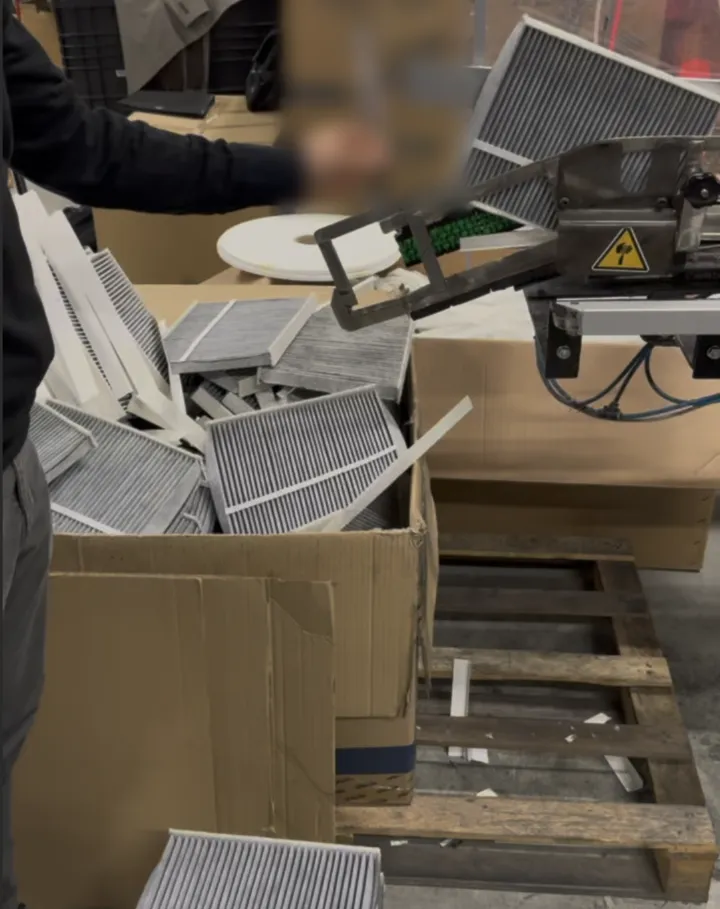
Sample checks let defects slip through between one sample and the next. A vision system checks every part, always to the same standard, and rejects it before it reaches your customer.
- Completeness: for example, verifying that injection moulding has filled the entire part. This is our plastic moulding case study.
- Presence and position of components, inserts, clips and seals.
- Non-contact measurement of dimensions and tolerances.
- Surface defects: scratches, flash, stains and bubbles.
- Code reading, dates and text for traceability.
Vision to guide the robot
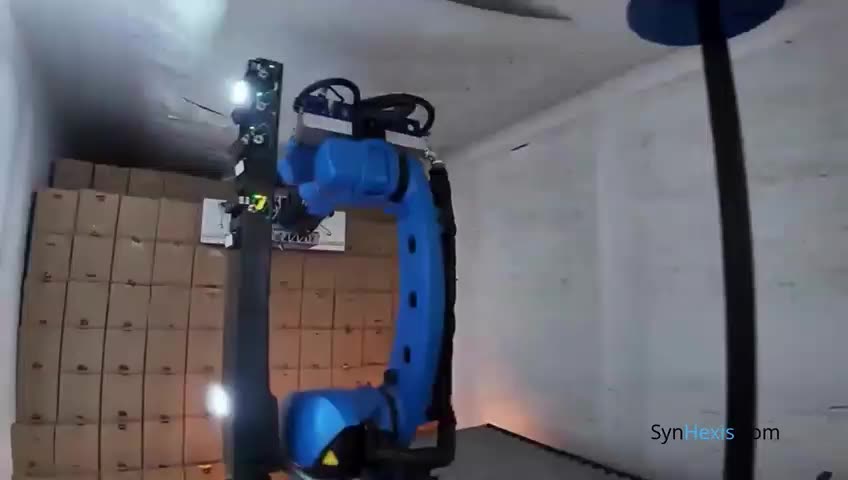
The camera tells the robot where the part is and how it is oriented. This allows picking from a conveyor or a container without centring fixtures, and format changes without mechanical modifications. With artificial intelligence, the robot can also recognise objects that differ from one another, such as the cartons handled by our container unloading robot.
3D bin picking
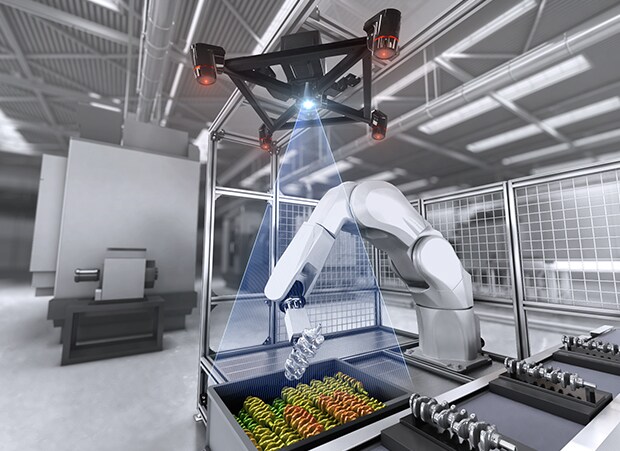
When parts arrive jumbled in a bin, Keyence RB series 3D vision builds a point cloud, identifies the individual parts and calculates a collision-free, reachable grip for each one. The robot picks them one at a time and places them correctly oriented on the machine or conveyor, with no operator needed to lay them out by hand first. We design the gripper and the cell around the bin picking application.
How we deliver it
- Feasibility trial on your partsYou send us good and defective parts, and we verify that the defect can be detected reliably.
- Choice of camera, optics and lightingThe right lighting matters as much as the camera: it makes the defect visible in a repeatable way.
- Software and integrationConnection to PLC and robot, automatic rejection, operator interface and results archive.
- Validation in productionWe measure false rejects and missed defects before handover.
Frequently asked questions
What can a vision system check?
Presence or absence of components, part completeness, dimensions, position and orientation, surface defects, codes and text. The first step is always a trial on your own parts, both good and rejected.
Can vision guide the robot?
Yes. The camera locates the part and its orientation, so the robot can pick it even when it arrives in a random position, without centring fixtures.
Which cameras do you use?
We choose the sensor to suit the application: Keyence industrial smart cameras, 2D and 3D systems such as Keyence RB series 3D vision for bin picking, and our own vision and artificial intelligence software where needed.
Does it integrate with my existing line?
Yes. The system exchanges signals with PLCs and robots, rejects defective parts in line and logs the results for traceability.