The challenge
Sanding curved surfaces, such as those of a washbasin, is strenuous, dusty work that is hard to keep consistent by hand. Yet automating it without verification is risky: if the disc does not sit correctly at every point, areas are left unfinished or marked.
Our solution: simulate first
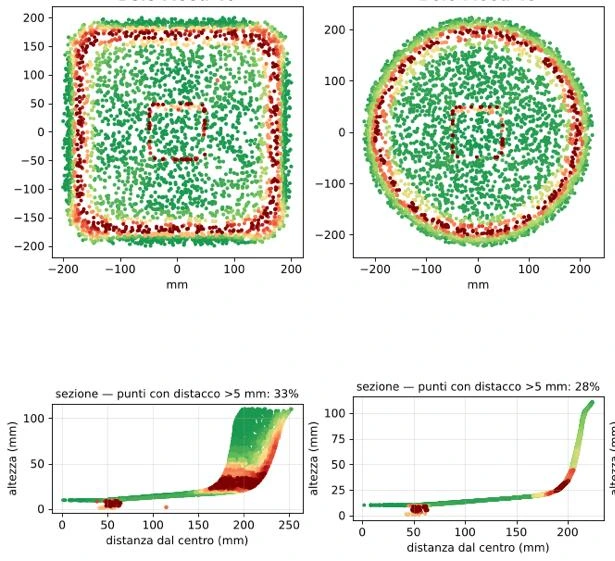
- 3D model of the part and the tool, in this case a 77 mm diameter abrasive disc.
- Calculation of the robot paths across the surface.
- Contact map: at every point we see how the disc sits and where the finish would not be even.
- Correction of paths, tilt and force before the cell is built.
Why it matters
The feasibility study shows before any investment whether the result will be as intended. It is the same method we use for all our robotic cells: verify and calculate the ROI first, build afterwards.